
Anyone who refers to the vegan movement as a monolith clearly hasn’t taken the time to get to know many of the people who identify as vegan. Vegans come in all shapes, sizes, ages, colors, ethnicities, temperaments, educations, economics, and more.
Just like any large swath of humanity, there’s no one blanket statement that can be used to define the growing number of people now eating a plant-based diet.
The reasons for going vegan are just as numerous. Those different motivations have come to define numerous micro labels that might help explain the different types of vegans you might encounter.
What Is A Vegan?
At the heart, a vegan is someone who tries to reduce their contribution to suffering to the best of their ability. The word vegan is technically a philosophical label that describes a person who makes food and lifestyle choices based on their ethical consequences.
This definition describes veganism perfectly:
Veganism is the practice of abstaining from the use of animal products and the consumption of animal source foods, and an associated philosophy that rejects the commodity status of animals. A person who practices veganism is known as a vegan; the word is also used to describe foods and materials that are compatible with veganism. Wikipedia
🌿 Key Health Benefits of a Vegan Diet
❤️ 1. Better Heart Health
- Lower levels of LDL (bad) cholesterol
- Reduced risk of heart disease and hypertension
- High intake of fiber, antioxidants, and healthy fats from plants
⚖️ 2. Healthy Weight Management
- Typically lower in calories and saturated fat
- High fiber content increases satiety, helping prevent overeating
- Vegans often have lower BMI on average
🥦 3. Improved Digestion & Gut Health
- Rich in dietary fiber, which supports digestion
- Promotes a healthy gut microbiome
- Helps prevent constipation
🧠 4. Anti-Inflammatory & Antioxidant Effects
- Plant foods are rich in phytonutrients and antioxidants
- May reduce chronic inflammation, which is linked to many diseases
💉 5. Better Blood Sugar Control
- High-fiber foods slow glucose absorption
- Improves insulin sensitivity, especially beneficial for diabetics
History of the Word “Vegan”
The word “vegan” came to be in 1944, when it was created by Donald Watson and his soon-to-be-wife Dorothy Morgan, both members of the Vegetarian Society. There were growing requests for non-dairy vegetarian resources in the community, but it wasn’t until 1944 that the word was officially coined.
The word vegan is a shortened version of vegetarian—including the first three letters and last two letters of the word, which Donald thought nicely represented “the beginning and end of vegetarian.”
What Do Vegans Eat?
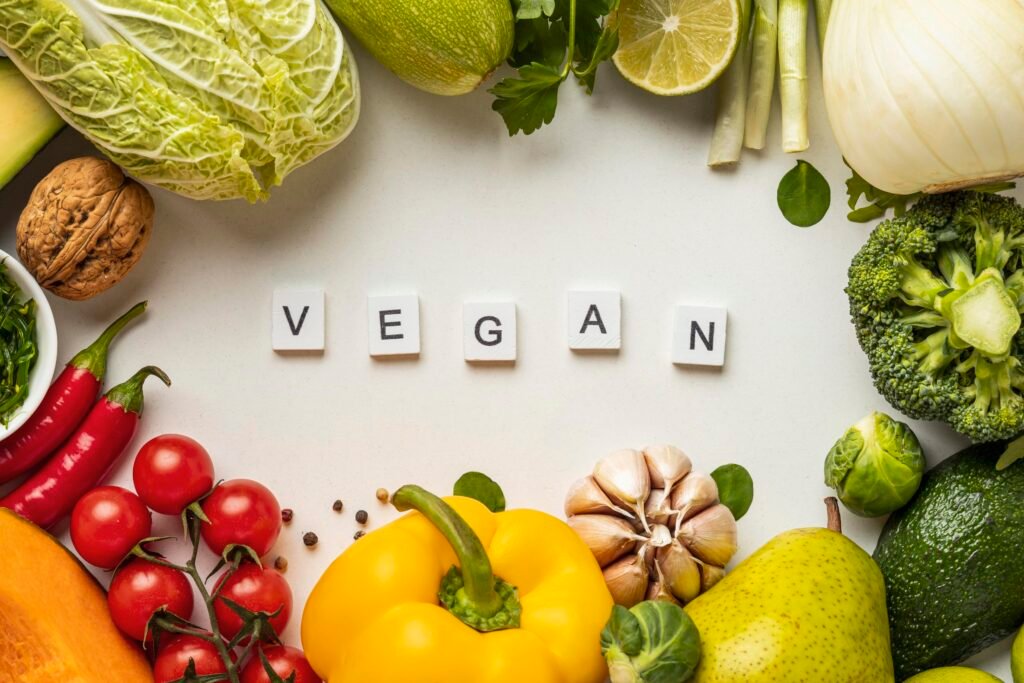
Vegans eat a wide variety of plant-based foods that provide all essential nutrients without using animal products. Their diet includes fruits, vegetables, whole grains, legumes such as lentils, beans, and chickpeas, nuts and seeds, and plant-based oils. Vegans also consume plant proteins like tofu, tempeh, soy products, and quinoa, along with dairy alternatives such as almond milk, soy milk, coconut yogurt, and vegan cheese. To meet nutritional needs, many vegans choose fortified foods for nutrients like vitamin B12 and calcium. Overall, a vegan diet focuses on natural, plant-derived foods that are nutritious, diverse, and sustainable.

What Vegans Avoid Eating, Wearing and Using
Vegans avoid eating, wearing, or using anything derived from animals as part of a lifestyle focused on compassion, health, and environmental sustainability. In their diet, this means excluding meat, fish, dairy, eggs, and honey, instead choosing plant-based foods like fruits, vegetables, grains, legumes, nuts, and seeds.
However, all of these can be recreated using plant-based ingredients. As a result, vegans can happily enjoy alternatives such as vegan chicken, animal-free bacon, plant-based shrimp and salmon, dairy-free cheeses, ice cream, butter, and yogurt, as well as vegan leather shoes and more.